Quick Summary
- RTP (Return to Player) is the theoretical percentage of wagered money a slot pays back over millions of spins — most online slots run between 94% and 97%
- A 96% RTP means a 4% house edge: for every $100 wagered, the game keeps $4 on average
- Online slots average 96%+, while land-based machines typically return just 85%–93%
- RTP is a long-term statistical figure, not a guarantee for any single session
- Table games beat most slots on RTP — blackjack and video poker can reach 99.5%
- Read RTP together with volatility to choose games that actually fit your bankroll
Table of Contents
- What Is RTP?
- How RTP Is Calculated
- Average RTP by Game Type
- RTP vs. Volatility: What’s the Difference?
- How RTP Affects Your Bankroll
- Where to Find a Slot’s RTP
- RTP Myths, Debunked
- How to Choose High-RTP Slots: Checklist
- Pros & Cons of Playing High-RTP Slots
- Frequently Asked Questions
- Conclusion
What Is RTP?
RTP stands for Return to Player — the percentage of all money wagered on a game that it is designed to pay back to players over time. It is the direct opposite of the house edge: if a slot has an RTP of 96%, the casino edge on that game is 4%.
In practical terms, a 96% slot returns $96 for every $100 wagered over its lifetime, keeping $4 as casino profit — the reason gambling stays profitable no matter who wins on any given day.
RTP is the most useful number on any paytable because it lets you compare games mathematically. A slot at 97.5% is objectively cheaper to play than one at 94.5%, and over thousands of spins that difference adds up.
How RTP Is Calculated
RTP is not measured by playing a machine for a week. It is baked into the game’s math model before release: developers build a paytable and a random number generator, then simulate millions of spins — typically 10 million or more — to verify the theoretical return.
The calculation itself is simple:
RTP = (total returns to players ÷ total wagers) × 100
Every symbol combination has a fixed probability and payout. Multiply each payout by its probability, add everything up, and you get the expected return per spin — 0.96 means a 96% slot.
Two things are worth knowing:
- RTP is theoretical. It assumes infinite play; your results over a few hundred spins will almost certainly differ.
- RTP can vary by version. Some operators request lower-RTP builds (94% instead of 96%) to improve margins — always check the RTP inside the game itself, not on a marketing page.
Pro Tip: Some providers let you switch RTP versions in the game settings before you spin. If you see a choice, pick the highest RTP version — it costs nothing and improves your long-term math.
Average RTP by Game Type
Not all casino games are equal. Slots are the most popular category but not the most generous — here is how typical RTP values stack up:
| Game Type | Typical RTP | House Edge |
|---|---|---|
| Online slots (average) | 94% – 97% | 3% – 6% |
| Land-based slots | 85% – 93% | 7% – 15% |
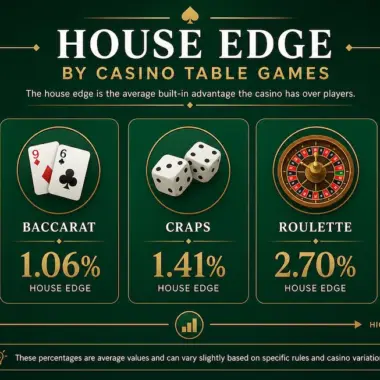
| European roulette | 97.30% | 2.70% |
| American roulette | 94.74% | 5.26% |
| Blackjack (basic strategy) | 99.00% – 99.50% | 0.50% – 1.00% |
| Video poker (Jacks or Better) | 97.00% – 99.50% | 0.50% – 3.00% |
| Baccarat (banker bet) | 98.94% | 1.06% |
| Craps (pass line) | 98.59% | 1.41% |
Three takeaways from this table:
- Online slots beat land-based slots by a wide margin — one more reason to prefer licensed online casinos.
- Slots still trail table games. Perfect blackjack strategy faces a sub-1% edge; the average slot hands the casino 3%–6%.
- The exact RTP matters more than the category. A 97% slot beats a 95% video poker variant played with sloppy strategy.
For a deeper look at which games give you the best mathematical chance, see our casino game odds and house edge guide.
RTP vs. Volatility: What’s the Difference?
RTP and volatility are often confused, but they answer different questions. RTP tells you how much a game returns long-term; volatility tells you how it returns it.
A high-volatility slot might pay nothing for 200 spins and then land a 500x win. A low-volatility slot pays small amounts constantly but rarely produces a big hit. Both can share the same RTP of 96%.
| Volatility | Win Frequency | Typical Win Size | Bankroll Impact |
|---|---|---|---|
| Low | High (30%+ of spins) | Small, frequent | Slow, steady burn |
| Medium | Moderate (20%–30%) | Mixed | Balanced |
| High | Low (5%–15%) | Large, rare | Big swings |
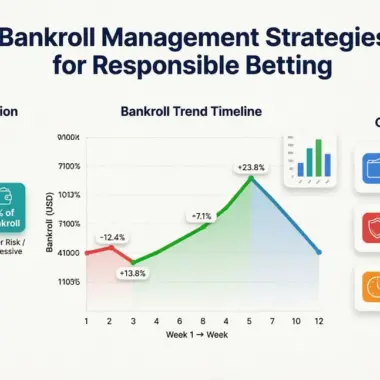
RTP is the average; volatility is the ride. A 96% high-volatility slot can still empty a modest bankroll quickly, because variance trumps math in the short term. Choose volatility based on your bankroll — our bankroll management guide shows how to size bets for each profile.
How RTP Affects Your Bankroll
RTP’s real power shows up over volume. Consider two slots played at $1 per spin:
| Slot RTP | Expected Loss per 1,000 Spins | Expected Loss per 5,000 Spins |
|---|---|---|
| 94% | $60 | $300 |
| 96% | $40 | $200 |
| 97.5% | $25 | $125 |
Over 5,000 spins, the 97.5% slot costs $175 less than the 94% slot — on the same budget and bet size.
You can estimate your expected hourly loss with a simple formula:
Hourly expected loss = (bet size × spins per hour) × house edge
At $1 per spin and 600 spins per hour, a 96% slot costs about $24 per hour in expectation; the same session on a 94% slot costs about $36. Over a month of weekend sessions, that adds up.
Two practical rules:
- Treat RTP as a filter, not a guarantee. It defines your expected cost of entertainment, not tonight’s result.
- Never raise stakes to “beat” a low RTP. Chasing losses compounds the disadvantage — bet sizes come from your bankroll plan, not frustration.
Where to Find a Slot’s RTP
Finding the RTP of a specific slot is easier than most players think:
- In-game info button. Most slots have an “i” or “help” button that opens the paytable and rules — RTP is usually listed at the bottom.
- Game provider’s website. Developers like NetEnt, Play’n GO, and Pragmatic Play publish RTP figures for their titles.
- Casino game page. Many online casinos list RTP in the game details, though you should double-check against the in-game value.
- Independent review sites. Most list RTP, volatility, and max win for popular slots.
If a slot’s RTP is nowhere to be found, treat that as a red flag. Reputable providers always disclose theoretical return — a missing number often means a low-RTP version you are not meant to notice.
RTP Myths, Debunked
Misunderstandings about RTP cost players real money. Here are the most common myths:
- “This slot is due for a win.” False. Every spin is independent; the RNG has no memory. A slot that has not paid in 300 spins is no likelier to pay on spin 301.
- “High RTP means I’ll win today.” Not necessarily. High RTP improves long-term odds but says nothing about your next session.
- “Casinos adjust RTP per player.” No. The RTP of a given game version is fixed; casinos cannot flip a switch per account.
- “100% RTP means free money.” A 100% RTP game exists only in theory — and even then, variance could wipe you out in one session.
- “Progressive jackpot slots pay like normal slots.” Not quite. A portion of every bet funds the jackpot, and the base game’s effective RTP is often lower until the jackpot grows large.
How to Choose High-RTP Slots: Checklist
Use this checklist before you spend a cent on a new slot:
- Open the paytable via the info (i) button and find the RTP.
- Only consider slots at 96% RTP or higher.
- Check the volatility rating and match it to your bankroll.
- Look at the max win figure and decide whether it fits your goals.
- Skip slots with undisclosed RTP — plenty of transparent alternatives exist.
- Play the demo version first to feel the hit frequency.
- If playing with a bonus, confirm the slot contributes 100% toward wagering.
- Set a session budget before you spin, based on your overall bankroll plan.
Pros & Cons of Playing High-RTP Slots
✅ Pros
- Lower long-term cost — every percentage point of RTP saves money over volume
- Easier bankroll planning — expected losses become more predictable
- Transparency — high-RTP games usually come from reputable providers
- Better bonus value — bonuses on 96%+ slots clear more efficiently
❌ Cons
- RTP does not prevent losing sessions — variance still applies
- High-RTP games can still be high volatility — a 97% slot can drain a small budget fast
- Some popular games are low-RTP — skipping them may mean missing out on features
- Progressive jackpots can pay more — if you win, but the odds are worse
Frequently Asked Questions
What is a good RTP for an online slot?
96% or above. The best slots reach 97%–98%; anything below 94% is poor value for regular play.
Is RTP the same as payout percentage?
Yes. “RTP” and “payout percentage” are used interchangeably to mean the theoretical return to player.
Does a higher RTP guarantee more wins?
No. RTP is a long-term average — in any short session, a 98% slot can lose just like a 94% one.
Why does the same slot have different RTP at different casinos?
Operators can request lower-RTP versions of the same game from the provider. Always verify the RTP inside the game you are actually playing.
Do progressive jackpot slots have lower RTP?
Often yes. A share of every bet funds the jackpot, so the base game’s RTP is typically lower. The effective return improves as the jackpot grows.
What’s the difference between RTP and hit frequency?
RTP is the long-term return; hit frequency is how often a spin wins. A 96% slot can have a 40% or a 10% hit frequency — that difference is volatility.
Conclusion
RTP is the most important number on any paytable, but only half the story. Filter games by it, pair it with volatility to match your bankroll, and slot play becomes a calculated choice. A 96%+ slot will not make you a winner by itself — but it makes every session cheaper, and cheaper sessions are how bankrolls survive.
Start by checking the RTP of your current favorite slot. Then compare it with our casino game odds guide to see which games truly give you the best mathematical chance, and set a budget with the bankroll management guide before your next deposit.
Last updated: August 2026 | Always verify terms before depositing. Gambling should be entertainment, not a way to make money.