
Quick Summary
- NHL moneylines are tight: the league is built on parity, and home teams win only about 53–55% of games
- The puck line (-1.5/+1.5) behaves like a run line — favorites win by two or more in roughly 40% of games
- Goalie confirmation is the single most important pre-bet check in hockey
- Totals usually sit at 5.5 or 6.5; pace, special teams and backup goalies drive the number
- Betting blindly on favorites is a long-term losing strategy in a league with a hard salary cap
- Record closing lines: NHL markets move sharply once starting goalies are announced
Table of Contents
- Why the NHL Is a Different Betting Animal
- Moneyline Betting in Hockey
- The Puck Line Explained
- Totals: Over and Under 5.5 or 6.5
- Why Goalies Decide NHL Markets
- Injuries, Travel and Schedule Spots
- Special Teams and Advanced Metrics
- A Practical NHL Betting Workflow
- Bankroll Management for an 82-Game Season
- Frequently Asked Questions
- Conclusion
Why the NHL Is a Different Betting Animal
The NHL is the most parity-driven major North American league. A hard salary cap, a 32-team league, and a playoff format that rewards hot goaltending mean regular-season results are noisy. That cuts both ways: fewer reliable favorites, but also more mispriced underdogs.
Hockey also has a structural quirk — the shootout and overtime. A game tied after 60 minutes goes to 3-on-3 overtime, then a shootout. Many markets, including the puck line and totals, settle on the 60-minute result or exclude the shootout depending on the book. Always read the market rules before betting.
If you are new to American odds, the odds guide on BonusEdge explains how -150 and +130 translate into implied probability.
Moneyline Betting in Hockey
The moneyline is simply who wins, including overtime and shootout. Prices are usually in the -110 to +150 range for most games, with heavy favorites occasionally reaching -200.
| Team | Moneyline | Implied probability |
|---|---|---|
| Home favorite | -145 | 59.2% |
| Away underdog | +125 | 44.4% |
| Total | — | 103.6% |
The 3.6% overround is typical. Because the league is close, a -145 favorite is not a “safe” bet — it is a coin flip with a slight lean. Long-term profit comes from finding spots where the market overrates a team based on reputation, recent scoring, or a misleading win streak.
Home ice is worth roughly 3–4% in win probability, which translates to about 10–15 cents on the moneyline. Rest advantages matter too: a team playing the second night of a back-to-back is usually 3–5% less likely to win.
The Puck Line Explained
The puck line is a fixed handicap of 1.5 goals. The favorite is typically -1.5 at plus money (+150 to +190), while the underdog is +1.5 at minus money (-170 to -210).
This creates an interesting dynamic: favorites win outright often, but win by two or more only about 38–42% of the time. That makes -1.5 a bet on blowouts, not just wins. Underdogs at +1.5 win or lose by one in roughly 60% of games, which is why the price is heavily juiced.
When is the puck line useful?
- Backing a strong team against a weak backup goalie. Blowout potential rises.
- Fading a tired team on the second leg of a back-to-back. Empty-net goals inflate margins.
- Taking +1.5 on a live underdog. You get insurance against a one-goal loss.
Do not treat -1.5 as a way to boost a favorite’s price without understanding the cost. You are sacrificing roughly 20 percentage points of win probability for the payout.
Totals: Over and Under 5.5 or 6.5
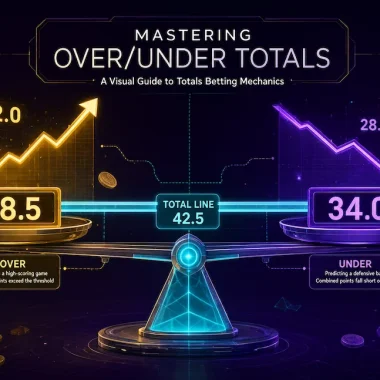
NHL totals usually sit at 5.5 or 6.5, with the juice shifting based on the matchup. The median NHL game produces about six goals, but the distribution is wide.
Key drivers:
- Goalie quality. An elite starter can move a total by 0.3–0.5 goals.
- Back-to-backs. Tired legs and backup goalies tend to push totals up.
- Special teams. Teams with strong power plays and weak penalty kills create more goals.
- Game state. Teams trailing late pull the goalie, which produces empty-net goals and pushes overs.
- Referee tendencies. Some crews call more penalties, increasing power-play time.
A common mistake is betting overs because two teams played a 6–5 game last week. Recency bias is strong in hockey totals. Look at 10–20 game samples of expected goals for and against, and check who is starting in net.
Why Goalies Decide NHL Markets
No position in major professional sports affects a betting line more than an NHL goaltender. A confirmed starter versus a backup can move a moneyline by 20–40 cents and a total by half a goal.
Before betting any NHL game:
- Check the projected starter from team beat reporters or the league’s official media feeds.
- Confirm the starter roughly an hour before puck drop.
- Note back-to-backs: coaches often play the backup in the second game.
- Check for “goalie pulls” — a starter who was pulled in his last outing may be dealing with confidence or workload issues.
If you bet early, you are betting on a goalie guess. Some bettors accept that risk for a better price; most should wait for confirmation.
Injuries, Travel and Schedule Spots
Hockey injuries are frequent and often undisclosed. A top-six forward or top-pair defenseman out of the lineup can shift a line by 10–20 cents, especially on the power play.
Schedule spots that matter:
- Second night of a back-to-back: fatigue, backup goalie, reduced intensity.
- Third game in four nights: compounding fatigue.
- Long road trips: Western Canadian swings and multi-city trips disrupt routines.
- Altitude: games in Denver tend to produce higher totals and more fatigue for visiting teams.
- Post-trade-deadline roster churn: new players need time to fit systems.
Special Teams and Advanced Metrics
Power play and penalty kill efficiency are among the most predictive team stats in hockey. A team converting 25% on the power play and killing 82% of penalties is materially different from one at 18% and 75%, even if their 5-on-5 results look similar.
Useful metrics:
| Metric | What it measures | Why it matters |
|---|---|---|
| Corsi (CF%) | Shot attempt share | Proxy for puck possession |
| Expected goals (xG) | Quality-weighted shot share | Better predictor than raw shots |
| PDO | Shooting + save percentage | Extreme values tend to regress |
| PP% / PK% | Special teams efficiency | Direct goal impact |
| High-danger chances | Shots from slot | Quality over volume |
If a team is winning while being outshot and out-chanced, regression is likely. That is often a spot to fade them — or to bet their opponent at a better price than the record suggests.
A Practical NHL Betting Workflow
- Scan the slate for injury news, back-to-backs, and goalie confirmations.
- Filter to two or three games you understand well.
- Estimate a fair moneyline using home ice, goalie quality, rest, and special teams.
- Compare to the market and look for a 4–5% edge.
- Check the total against pace and goalie matchup.
- Stake 1–2% of bankroll per bet.
- Log the closing line to evaluate your process later.
For a broader framework, see WagerWise on sports betting strategies and bet sizing and risk control.
Pro Tip: NHL lines move fastest in the hour before puck drop. If you have a strong opinion and a confirmed goalie, betting early can secure a better number — but only if you accept the risk of a late lineup change.
Bankroll Management for an 82-Game Season
The NHL season is long, and variance is high. A 1–2% flat stake per bet is standard for a reason: it keeps you in the game through a 10-game losing streak, which is entirely normal.
| Bankroll | Stake per bet | Stop-loss per week |
|---|---|---|
| $500 | $5–$10 | $50 |
| $2,000 | $20–$40 | $200 |
| $10,000 | $100–$200 | $1,000 |
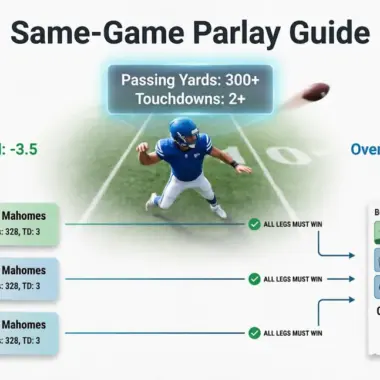
Avoid parlays and puck-line parlays as a primary strategy. The margin compounds quickly. If you want a bigger payout, consider a small-stake same-game parlay rather than a large straight bet. Our bankroll management guide explains the math.
Frequently Asked Questions
Is the NHL profitable to bet on?
It can be, because parity creates mispricing. But the margin is real, and most bettors lose. Success depends on goalie information, advanced metrics, and disciplined staking.
What is the puck line in simple terms?
The puck line is a 1.5-goal handicap. The favorite must win by two or more (-1.5); the underdog covers by winning, drawing, or losing by one (+1.5).
Should I bet before goalies are confirmed?
Generally no. Early prices can be better, but you are accepting lineup risk. If you do bet early, size down.
Are NHL totals usually over or under?
It depends on the matchup. League average scoring is around six goals, so a 5.5 line leans over and a 6.5 line leans under, before adjusting for goalies and pace.
Do shootouts count in NHL betting?
It depends on the market. Moneylines usually include overtime and shootouts; some puck lines and totals settle on 60 minutes. Always check the book’s rules.
Conclusion
NHL betting is a game of information and patience. Confirm goalies, respect the parity of the league, use advanced metrics to spot regression, and stake small. The edges are there — but they disappear if you bet every game on reputation.
For more hockey-adjacent betting math, use our betting calculator and read WagerWise on understanding betting odds.
Last updated: October 2026 | Always verify terms before depositing. Gambling should be entertainment, not a way to make money.